Issue #017
The Autonomous COMMERCE Brief
June 25, 2026
BIG STORY
The Fleets Are Already Here. The Numbers Just Became Public.
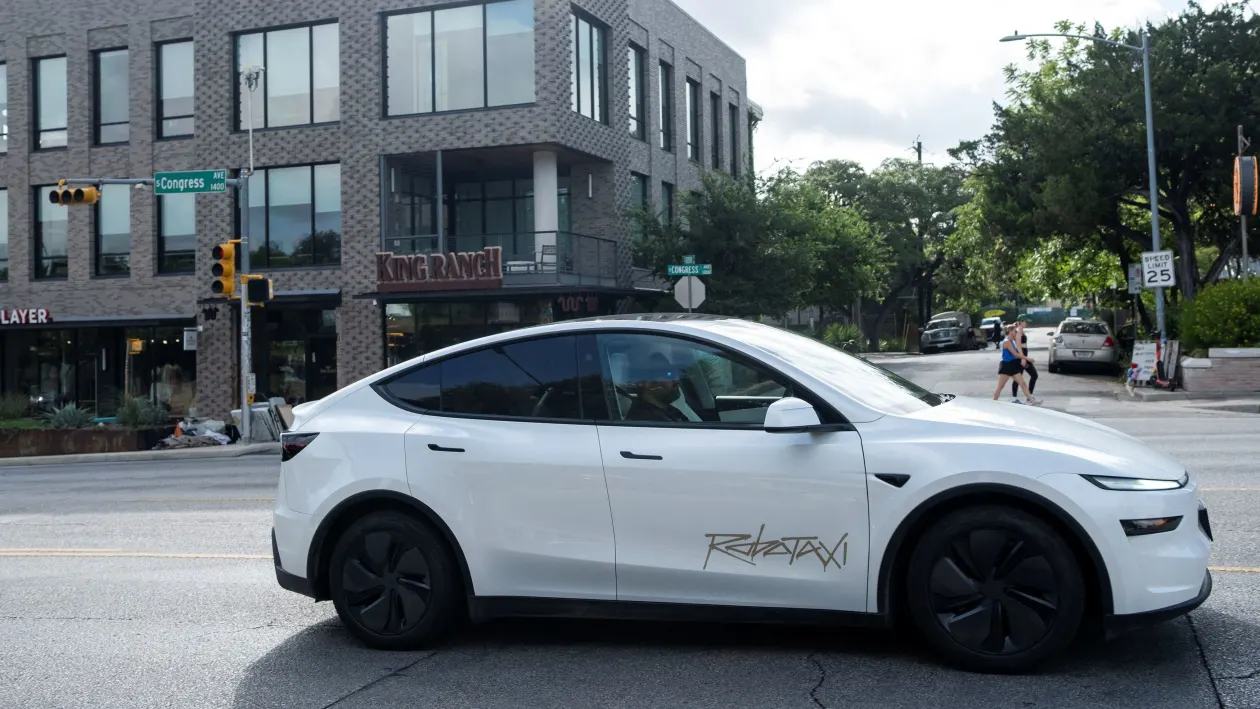
Nobody announced it. There was no press conference. But this week, a state-run autonomous vehicle tracker in Texas quietly showed something the industry has been building toward for months. Waymo now has 620 registered autonomous vehicles in Texas, up 7.5% from late May. Tesla jumped 64% in the same window, from 42 to 69 units. Zoox added eight more. Avride is sitting at 317. These are not prototype counts or pilot numbers. These are registered vehicles on public roads, systems under test, fleets building in real time.
The tracker does not measure intent. It measures presence. And what it is showing is that the gap between "AVs are coming to my market" and "AVs are already in my market" is closing faster than most property operators and QSR brands have planned for. The infrastructure conversation, the one about where the vehicle stops, how the operator knows it is arriving, how the customer knows where to pick up, that conversation is not a 2027 problem. It is happening now, in the same cities where these vehicles are already registered and running.
The operators who have built coordination infrastructure at the curb before the fleet arrives are the ones who control the outcome. The ones waiting for scale to force the conversation will be scrambling to catch up to vehicles that are already on their block.
Autolane is built for this moment. The last 50 feet does not wait for a press release.
AV ROUND UP
Uber, Nuro, and Lucid Name Houston as Their Second Robotaxi Market. The trio confirmed Houston for a mid-2027 launch following their San Francisco Bay Area debut later this year, with Nuro already running 24/7 autonomous testing across both cities. Uber has secured a 50,000-square-foot Houston depot and the program is targeting dozens of markets over the coming years.
London Is Getting Three Robotaxi Operators at Once. Wayve opened a rider interest list through Uber this week and says it is ready to go commercial this summer. Waymo already has 100 test vehicles in a 100-square-mile area of the city. Baidu's Apollo Go is preparing to enter as well, partnering with both Uber and Lyft. Same ancient roads, same fares, within weeks of each other.
SPOTLIGHT
Austin. July. The First Commercial Autonomous Delivery Is Weeks Away.
A major Austin restaurant is about to deliver autonomously for the first time. Not as a test. Not as a pilot press release. As a service. The story belongs to the brand doing it.
What is live underneath is the coordination layer. The smart locker system. The software that tells an operator what is arriving, when it is arriving, and exactly where it stops. A human supervisor will be in the vehicle to start. The curb is already set up and ready.
This is what the last 50 feet looks like before it becomes the headline. Stay tuned to see who our first pilot is with.
SIGNALS TO WATCH
Uber Is Building Infrastructure Before the Rides Start. A 50,000-square-foot depot in Houston. Round-the-clock autonomous testing across two cities. A fleet of Lucid Gravity SUVs rolling through production in Arizona. Uber is not waiting for scale to justify the investment. It is building the operational backbone first and opening the service second. For property operators, that sequencing matters. The operators who understand that infrastructure precedes arrival are the ones who will be ready when the fleet shows up at their curb.
China Is Not Watching. It Is Already Running. Baidu's Apollo Go is pulling into London this summer. Pony.ai broke even in early 2026 and is targeting 3,000 active vehicles by year end. WeRide signed a 2,000-vehicle manufacturing order and cut assembly time to under 10 minutes. These are not roadmap announcements. They are operational numbers from companies already deploying at scale across Asia and now moving into Western markets. The US AV story is the one most operators are watching. It is not the only one building.
The Curb Is Still the Last Unsolved Problem. The vehicles are coming. The software is maturing. The regulatory frameworks are falling into place. What remains unsolved at most properties is the final handoff. Where does the AV stop? How does the operator know it is coming? How does the customer know where to pick up? Those questions do not get answered by the AV companies. They get answered by the operators who build for the arrival.
THE LAST 50 FT
Ep 12 is live. Harry Campbell spent a decade as the most trusted voice in rideshare, then got into a Waymo in LA and never looked back. He joins Ben and Cam to talk about what drivers actually think about AVs, Ben's UberEats and FSD experiment, and the number that reframes everything: Waymo does 500,000 rides a week globally. New York City alone does 700,000 Uber and Lyft trips every single day. The transition is real. It is just earlier than the headlines suggest.
THE AUTOCOMM BRIEF TAKE
This week had a lot happening. A London race with three operators on the same streets. Uber building depots in Houston. Tesla nearly doubling its Texas fleet in a month. A major Austin restaurant about to deliver autonomously for the first time.
The signal underneath all of it is the one that has always been there. The curb is the last decision in every autonomous trip. The vehicle, the route, the software, the depot, the regulation. None of it matters if the last 50 feet does not work.
You are reading this because you are one of the people who owns or manages those endpoints. The gap between "soon" and "now" is smaller this week than it was last week. It will be smaller again next week.
The lane is changing. Let's make sure it leads somewhere worth going. 🏁