Issue #001
The Autonomous COMMERCE Brief
March 8, 2026
BIG STORY
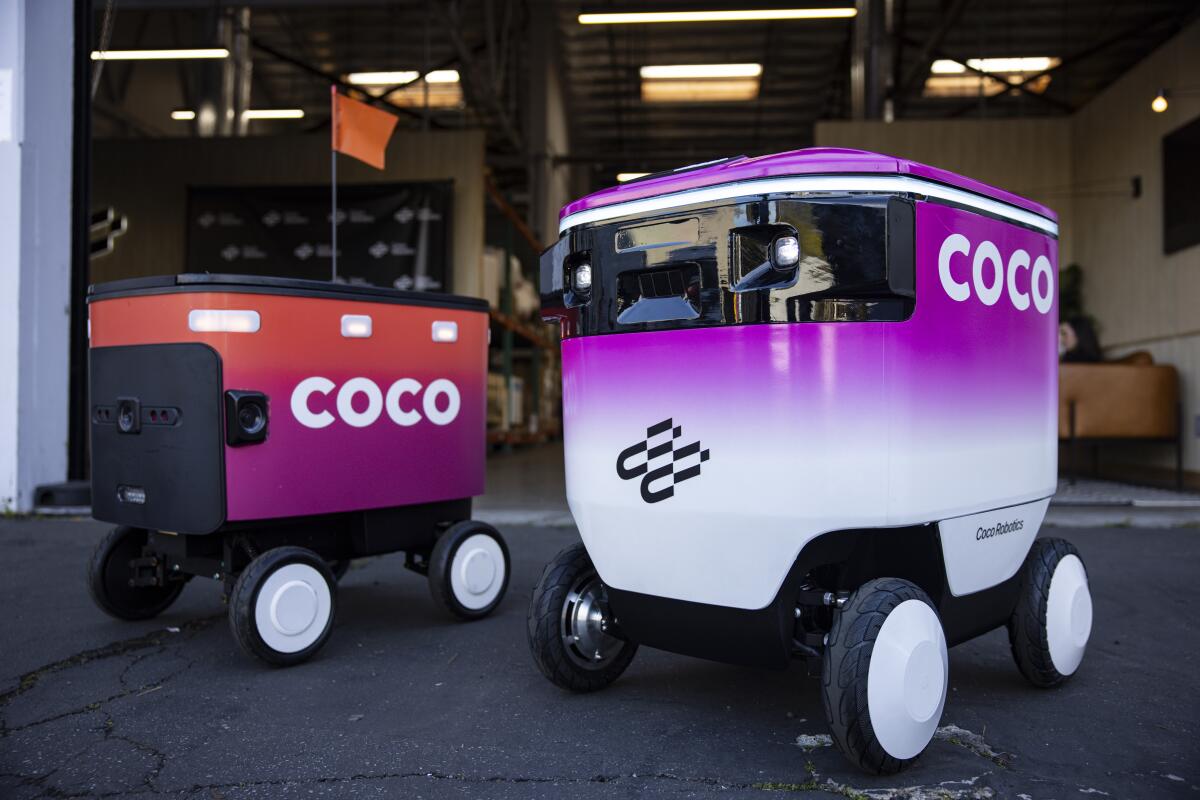
Coco 2 Just Dropped. And It's Gunning for Grocers.
On February 26th, Coco Robotics launched Coco 2, a next-generation urban delivery robot that makes a big leap: from human-assisted to fully autonomous. The new platform moves beyond sidewalks into bike lanes and select roadways, cuts delivery times by up to 50% compared to its predecessor, and is explicitly targeting grocers, pharmacies, and retailers, not just restaurants.
The fleet already serves 3,000+ merchants across Uber Eats, DoorDash, and Wolt. Coco plans to scale to thousands of robots globally by end of year.
The key quote from CEO Zach Rash: "Every mile our robots have driven has made the whole fleet smarter." That's the flywheel that matters. More miles, smarter robots, wider deployment. Coco 2 is the first major sidewalk robot launch of 2026 that's explicitly built for the grocery and retail vertical, not just food delivery.
The Autolane angle: A robot that can operate on roadways, bike lanes, and sidewalks needs clear, designated operating zones to do it safely at scale. Coco 2 is exactly the kind of platform Autolane zones are built for.
AV ROUND UP
Waymo is now in 10 cities. Last Tuesday's four-city launch (Dallas, Houston, San Antonio, Orlando) means Waymo now operates across over 500 square miles of commercial territory in the U.S. The service is open to select riders in each new market, with broader access rolling out over the coming months.
Tesla Robotaxi: live in two markets, ramping in one. Austin is running genuinely unsupervised rides since January 22nd, with the ratio of driverless vehicles growing. The Bay Area fleet is larger but still supervised per California law. Cybercab production officially started February 17th at Gigafactory Texas. The pace is "agonizingly slow" by Musk's own admission, but it's real production, not a prototype.
Uber Autonomous Solutions launched February 23rd. Uber is positioning itself as the operating backbone for the entire AV industry: demand generation, fleet management, compliance support, charging infrastructure, and customer experience, all as a service for AV partners. With nearly two dozen AV partnerships already signed, Uber's bet is that the commercial layer matters as much as the autonomy stack.
RETAIL ROUND UP
Kroger's Ocado Bet: A Cautionary Tale Worth Reading
While everyone talks about automation as inevitable, Kroger just handed the industry a hard lesson. After closing multiple Ocado-powered automated fulfillment centers last year, Kroger has pulled back significantly on the model, refocusing e-commerce efforts on its 2,700 physical stores for rapid delivery instead.
The takeaway is not that automation doesn't work. It's that capital-heavy, centralized automation is a fragile bet when consumer grocery habits shift. The grocers winning right now are pairing store-based fulfillment with lighter, scalable robotics rather than betting everything on massive dedicated warehouses.
Walmart, by contrast, is tracking IoT-connected pallets across 500 locations (with national expansion coming) and using AI to push inventory closer to customers before they even order. Different approach, different risk profile.
SIGNALS TO WATCH
- Coco 2 expanding beyond sidewalks into roadways is a regulatory signal worth tracking city by city. Where robots can go is still very much a moving target.
- Warehouse robotics going mainstream for SMEs. RaaS models are making automation accessible to mid-size operators for the first time, not just Walmart and Amazon.
- Zoox is gearing up for paid rides in SF and Las Vegas in 2026. Amazon's purpose-built robotaxi has no steering wheel, no pedals, inward-facing seats, and a bigger battery than retrofitted competitors. A sleeper worth watching.
- NY State's robotaxi ban remains in place after Gov. Hochul withdrew the expansion proposal last week. Labor politics are a real headwind in dense urban markets.
THE AUTOCOMM BRIEF TAKE
Coco 2 operating on roadways. Waymo in 10 cities. Tesla Cybercabs rolling off a production line. The hardware is here. The software is here. What's still missing in most cities is the physical infrastructure to make it all work safely together. Autolane zones are how the curb catches up to the tech.
👉 See where Autolane zones are coming near you: AV Coverage Checker
Image source: Los Angeles Times