Issue #003
The Autonomous COMMERCE Brief
April 1, 2026
The Big One This Week
Zoox Just Joined Uber. The Robotaxi Stack Is Now Complete.
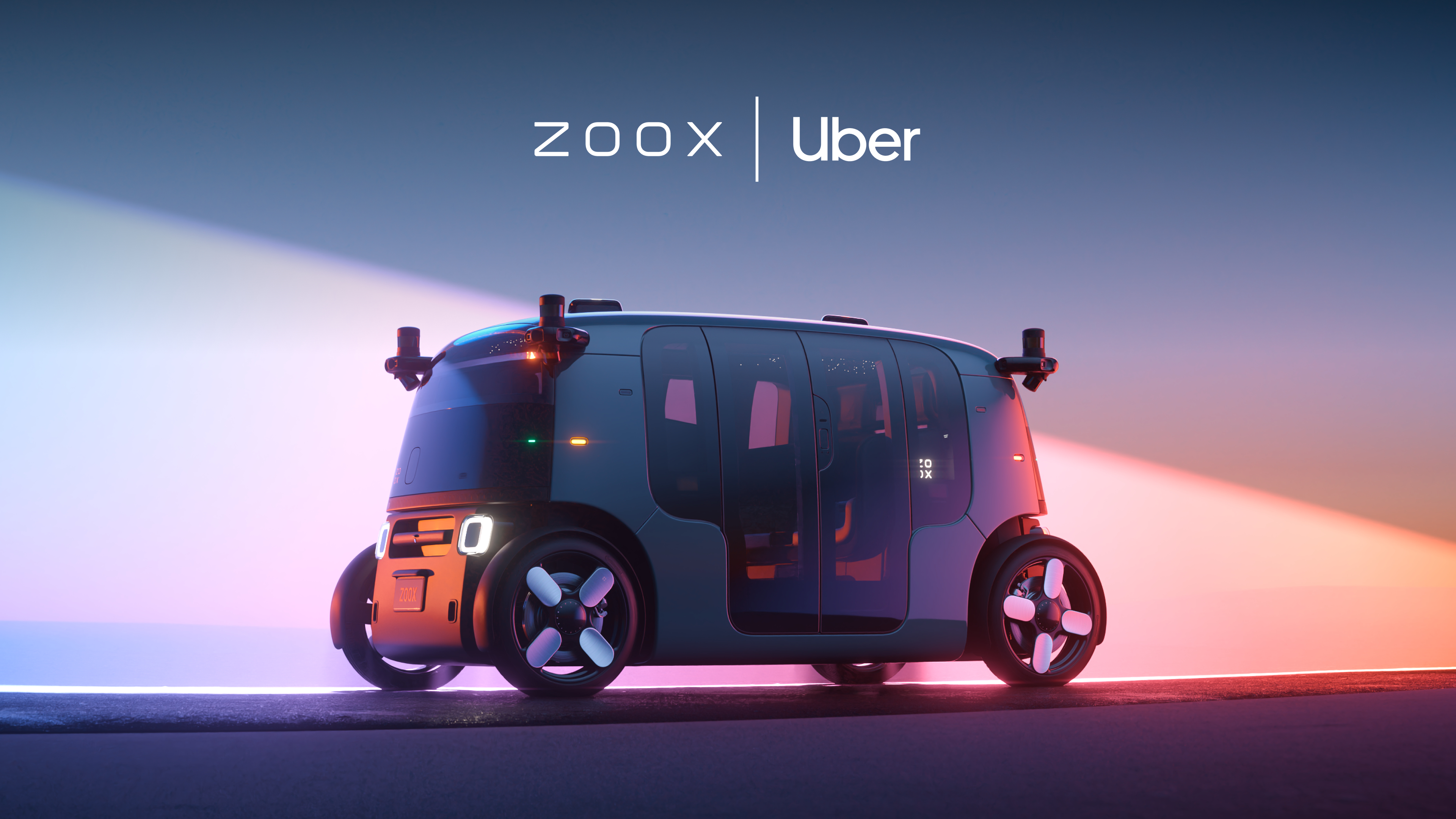
For years, Zoox was the one name missing from Uber's autonomous vehicle rolodex. That changed this week. Amazon's purpose-built robotaxi developer has partnered with Uber in what is Zoox's very first third-party commercial deal and it's a significant one. Uber riders will be able to hail a Zoox vehicle on eligible trips, initially in San Francisco and Las Vegas, with Los Angeles to follow in mid-2027.
What makes this notable isn't just the partnership. It's the company. Zoox has no steering wheel, no pedals, and inward-facing seats — it was built from scratch for full autonomy, not retrofitted from a consumer car. The company has now surpassed 1 million autonomous miles and transported more than 300,000 riders. It's also actively expanding testing in Dallas and Phoenix. Zoox CEO Aicha Evans was blunt about the vision: bringing autonomous mobility to the people who already know and love riding with Uber.
For Uber, this closes the loop. The platform now spans virtually every major AV player in the U.S.: Waymo, Tesla, Aurora, Avride, May Mobility, WeRide, Wayve, Baidu, Pony.ai, VW's ID. Buzz, Zoox, and a growing list of sidewalk delivery operators including Serve, Cartken, and Starship. Uber's bet...that the operating layer matters as much as the autonomy stack.... which is looking more correct by the week.
The ACB Angle: Zoox's inward-facing, doorstep-to-doorstep vehicle model puts maximum emphasis on the pick-up and drop-off experience. Where that exchange happens, at the curb, is exactly the infrastructure gap Autolane exists to solve. As Uber's AV fleet diversifies, the curb needs to be ready for all of them.
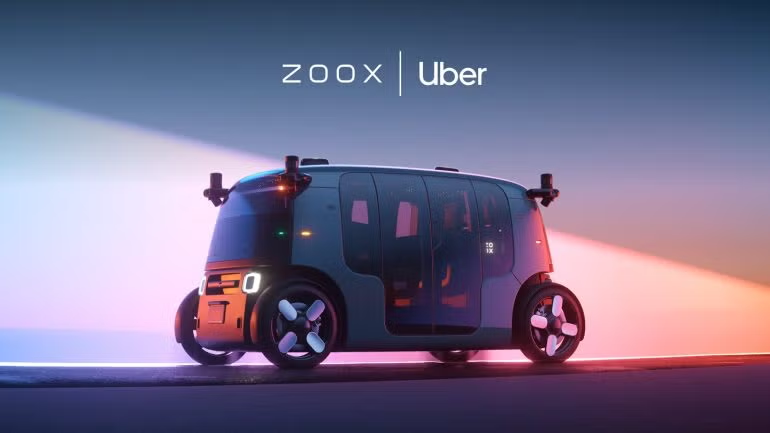
Image source: Uber Technologies, Inc.
AV Roundup
Aurora is about to go fully observerless on freight. The autonomous trucking company, which already operates a zero-incident driverless network across 10 routes in the Sun Belt, is on track to haul freight without any partner-requested observer in Q2 2026. That's a significant operational milestone, not just commercially, but legally. Aurora has now surpassed 250,000 driverless miles with a perfect safety record and is targeting more than 200 driverless trucks by year-end. New hardware launching in Q2 will cut costs by more than half and extend its FirstLight lidar range to 1,000 meters. For the supply chain operators and grocers watching this space: autonomous freight is no longer a 2027 story.
Grubhub's Northeast drone pilot launched today. The Grubhub, Wonder, and Dexa collaboration, the first drone food delivery program in the Northeast, went live in New Jersey as of March 18th. The Dexa DE-2020 drone is domestically designed and assembled, a deliberate differentiator as supply chain and manufacturing scrutiny intensifies. The Northeast has been sitting out the drone delivery wave that's been playing out across Texas and suburban markets for the past two years. That is now over.
VW's ID. Buzz is coming to L.A. — with a safety driver, for now. Volkswagen and Uber are beginning commercial deployment of the autonomous ID. Buzz in Los Angeles this year, with safety drivers on board initially. The plan is to phase them out by end of 2026, making LA one of the first U.S. markets where a purpose-built, Level 4-certified production van operates fully driverless on Uber. The ID. Buzz AD carries 27 sensors, 13 cameras, 9 LiDARs, 5 radars and was designed specifically for ridepooling, not retrofitted from a consumer platform. It is the most significant European OEM entry into the U.S. commercial AV market to date.
The Uber + NVIDIA + Stellantis alliance is quietly building the AV industry's backbone. Uber and NVIDIA are now jointly supporting a global Level 4 ecosystem that spans Aurora, Avride, May Mobility, Momenta, Motional, Nuro, Pony.ai, Waabi, Wayve, and WeRide, across passenger mobility, trucking, and delivery. Stellantis is among the first OEMs to deliver NVIDIA DRIVE-powered L4 vehicles into Uber's fleet. This is less a partnership announcement and more the architecture of the autonomous commerce era: one AI chipmaker, one platform operator, one vehicle manufacturer, and a dozen autonomy stacks, all running on the same commercial rails.
Partnership Spotlight
Autonomous Laundry Is Here. Autolane + Tumble Are Making It Real.
While the industry talks about autonomous commerce in the abstract, we're out here doing it. Autolane and Tumble, the on-demand laundry service, have a live partnership that puts fully autonomous laundry pickup and delivery on the streets of San Francisco using Autolane FSD vehicles with supervision.
The pitch is as simple as it gets: your laundry gets picked up, cleaned, folded, and delivered back to your door, with robots handling the movement, start to finish. No hassle. Just clean clothes.
This is exactly what autonomous commerce looks like in practice. Not a pilot deck. Not a press release about what's coming in 2027. An actual service, running today, in a real city, that people can try right now.
If you're in the SF area, give it a try and tag us with your experience.
This is what the lane changing looks like from the inside.
Signals to Watch
- Tesla Cybercab mass production begins in April at Gigafactory Texas. It's the first no-steering-wheel, no-pedal vehicle produced at volume by a legacy-adjacent automaker. What that pace looks like in month one will tell us a lot about whether the AV hardware flywheel is actually spinning.
- Nuro, Uber, and Lucid are targeting their first robotaxi deployment this year, a Lucid Gravity SUV running Nuro's Level 4 Driver software, bookable through Uber. Up to 20,000 vehicles are planned over six years. First one has to hit the road before we can count the rest.
- Waymo is heading to Tokyo and London. Test vehicles are already on Tokyo roads learning local traffic patterns. A London launch is planned for 2026. The first truly global commercial AV fleet is starting to take shape.
Autonomous Commerce Brief Take
This week's theme is consolidation, not of companies, but of the commercial stack. Uber is now the operating system for the entire AV industry. NVIDIA is the compute layer. Aurora owns the freight corridor. Zoox brings the last purpose-built holdout into the fold. And VW's ID. Buzz reminds everyone that legacy automotive isn't ceding this market quietly.
What's still missing? The physical environment to receive all of it. Every AV partner Uber signs, every driverless truck Aurora deploys, every drone that goes live in New Jersey is one more system that needs a designated place to operate safely when it arrives. The lane is changing faster than the curb is. That gap is the opportunity. Autolane is here to fill in the gaps.