Issue #005
The Autonomous COMMERCE Brief
April 6, 2026
The Big One This Week
500,000 Rides a Week. Waymo Just Proved the Model Works.
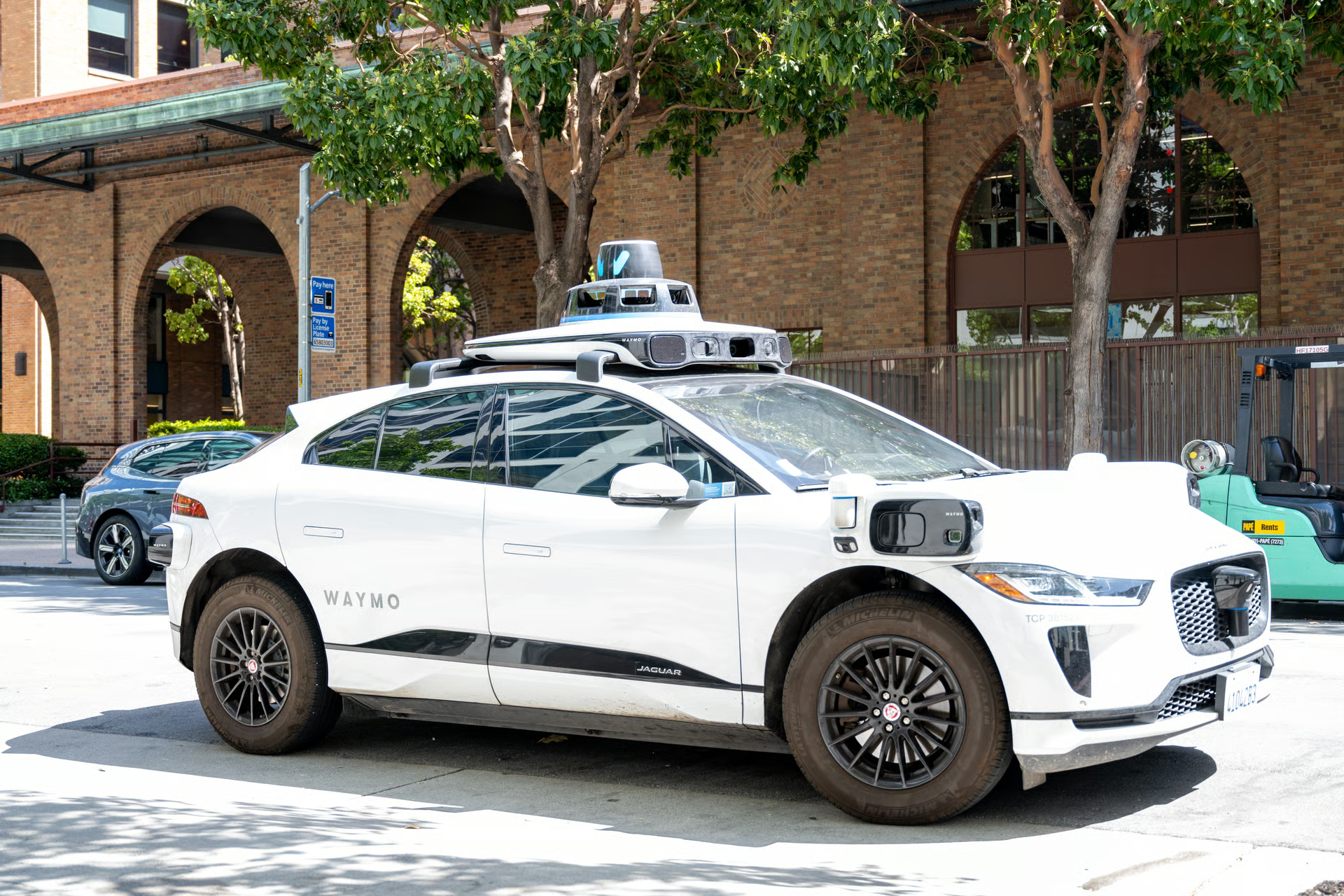
Two years ago, Waymo was completing 50,000 paid rides per week. This week, the company announced it has crossed 500,000 paid robotaxi rides per week, a tenfold increase in 24 months, across 10 U.S. cities, fully driverless, around the clock.
That number matters less as a milestone and more as a proof point for the people it represents. Half a million weekly trips means half a million moments where someone got where they needed to go, a doctor's appointment, a job interview, a night out, without needing to own a car, call a driver, or ask someone for a favor. For older adults losing the ability to drive, for people in cities where transit is unreliable, for families stretching every dollar, autonomous mobility isn't a tech story. It's an access story.
And the pace isn't slowing. Waymo is targeting 1 million rides per week by year-end, with expansion into 20+ cities including Tokyo and London on the horizon. Its 6th generation system, debuting on the Zeekr Ojai minivan and the Hyundai Ioniq 5, is designed to unlock a step change in fleet scale. The fleet hasn't grown much beyond 3,000 vehicles, but utilization has skyrocketed. That's what a mature operating model looks like.
The ACB Angle: 500,000 weekly trips all start and end somewhere. As Waymo scales toward a million, the quality of those pick-up and drop-off moments, how safe, how predictable, how designed, becomes the difference between a service people trust and one they just tolerate. The curb is the first and last impression.
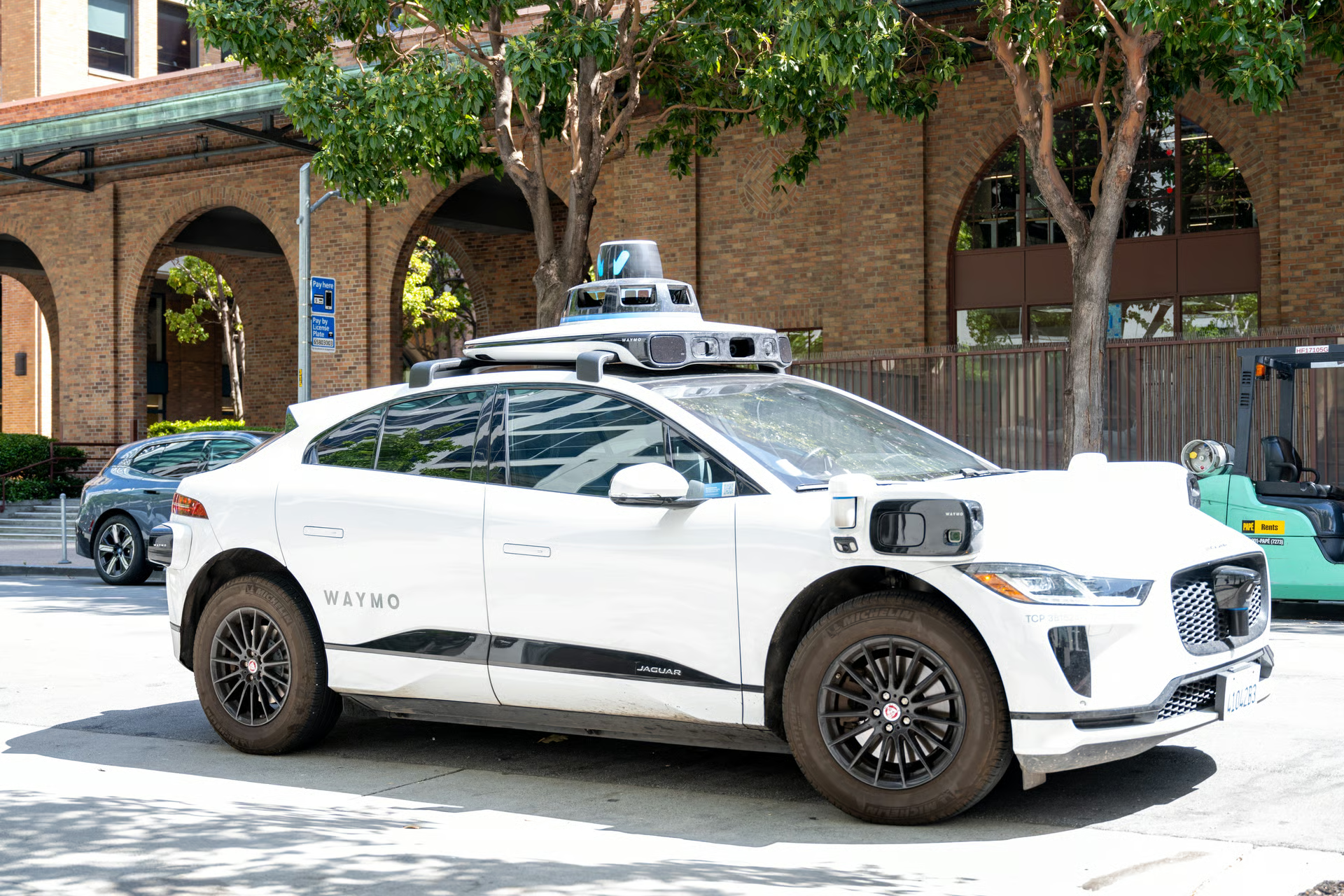
Image source: Quartz
AV Roundup
Autonomous mobility just went global...for real. WeRide and Uber launched fully driverless, fare-charging robotaxi operations in Dubai this week, starting in Jumeirah and Umm Suqeim, two of the city's most visited coastal districts. Riders book through the Uber app under the 'Autonomous' option. No safety driver. No pilot program. Just a ride. Dubai's Roads and Transport Authority has endorsed the service as part of the emirate's goal of 25% autonomous journeys by 2030. WeRide has already achieved operational profitability in the Middle East, a milestone almost no AV company has hit anywhere. The global map of commercial autonomous mobility just got a lot bigger.
Utah just gave AVs something they've needed everywhere: legal clarity. The state's governor signed a bill this week establishing a liability framework for autonomous vehicles, one of the clearest legal structures for AVs in the U.S. to date. When something goes wrong with a driverless car, the question of who is responsible has been a slow-moving obstacle for commercial deployment. Utah answered it. Expect other states to follow, especially with the SELF DRIVE Act still working its way through Congress.
Tesla's map is growing. Its fleet isn't. Tesla expanded its unsupervised robotaxi geofence in Austin to roughly 245 square miles, about 12 times its original footprint. The catch: only 4 to 8 vehicles are actually running without a human on board, and those still operate under remote supervision. Meanwhile Waymo runs 100+ vehicles across 90 square miles in Austin alone, with a 4.9-star rider rating. The gap between map size and operational scale is the story and it's a gap that matters to the riders waiting for a car that actually shows up.
Zoox is on public roads in Austin and Miami. Amazon's purpose-built robotaxi, no steering wheel, no pedals, inward-facing seats, is now navigating public roads in both cities after nearly two years of testing there. Paid rides through its early-rider program are coming later this year, pending a federal exemption. When they arrive, riders will experience something genuinely different: a vehicle designed entirely around the passenger, not retrofitted from a consumer car.
Retail Round Up
The Last Mile Is About to Get a Lot Cheaper and a Lot More Personal
A new market report puts the autonomous last-mile delivery sector on track to reach $6.24 billion by 2032, growing at nearly 20% annually.
But the more interesting number is this: food and grocery already commands 50% of that market. Not e-commerce. Not parcels. Food.
That tells you something about where the real demand is. People don't just want things faster, they want the things that matter most to daily life to arrive reliably, affordably, and without friction. Groceries. Prescriptions. A hot meal. The families and individuals who benefit most from autonomous delivery aren't the ones experimenting with novelty, they're the ones for whom delivery fees and unreliable windows are a genuine barrier.
The operators building toward that future, the grocers expanding curbside, the QSRs adding autonomous pickup lanes, the pharmacies piloting robot delivery, are the ones investing now in infrastructure that will serve those customers for the next decade. The technology is ready. The demand is there. What's still being built is the physical environment to receive it all gracefully.
Signals to Watch
- NHTSA's public comment period closes April 10 — one week from today. The federal guidance on AV remote assistance standards and behavioral competencies is being finalized. This is the rulemaking that sets the compliance floor for every commercial AV operator in the country.
- Tesla Cybercab production starts this month at Gigafactory Texas. First production numbers will signal whether the hardware flywheel is actually spinning or still winding up.
- WeRide's revenue grew 90% year-over-year in 2025, with fare-charging revenue up 500%. The commercial AV model is working, just not yet at scale in the U.S. That gap is closing faster than most people expected.
- Pony.ai is targeting 3,000 robotaxis across 20 cities by year-end, expanding from China into Zagreb and Doha. The center of gravity for deployed AV fleets is not solely in the U.S. anymore.
Autonomous Commerce Brief Take
Half a million rides a week. A Dubai street that any rider can hail a driverless car on. A Utah law that finally tells operators and passengers alike what the rules are. This week felt like a turning point — not because any single headline was dramatic, but because the cumulative weight of them was.
The world is getting better for the people who need autonomous mobility most. Slower than it should, harder than it needs to be, with more regulatory friction than the technology deserves...but better. That's worth naming.
The lane is changing. Let's make sure it leads somewhere worth going.
👉 Check your coverage area with the AV Coverage Checker and see where Autolane zones are coming near you.