Issue #006
The Autonomous COMMERCE Brief
April 9, 2026
BIG STORY
Waymo Has a New Car. And It Is Already on Your Streets.
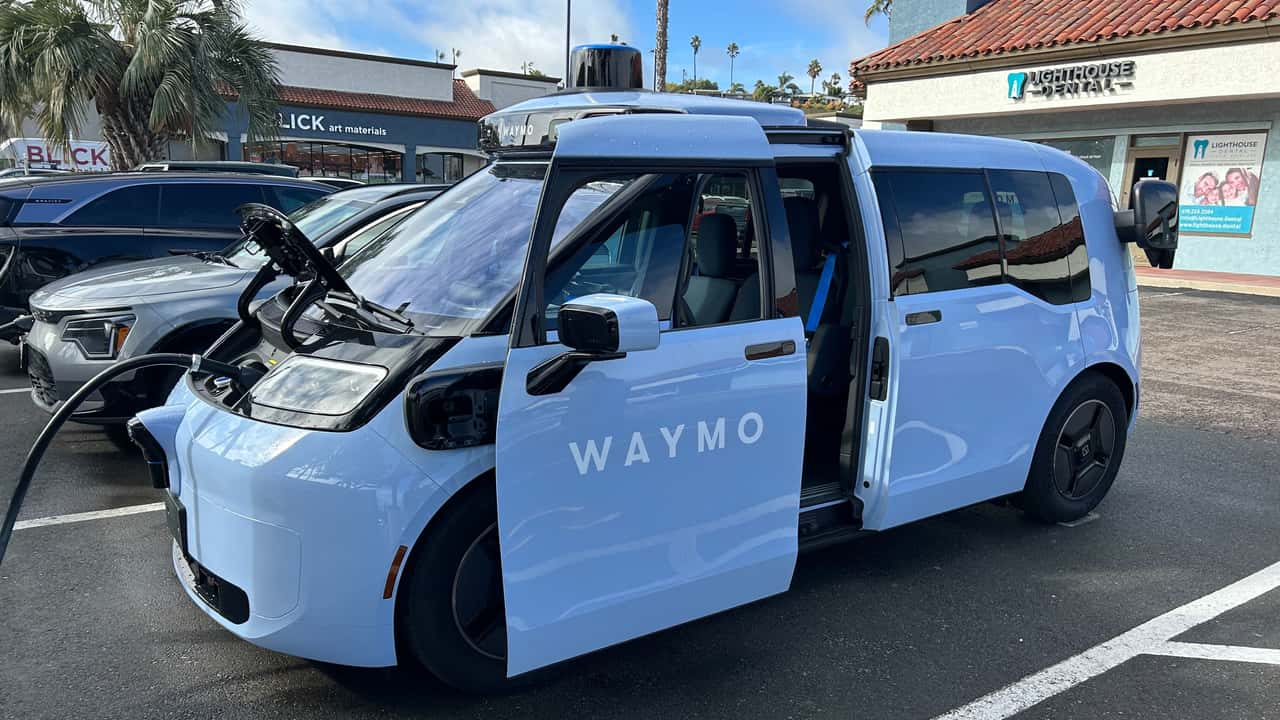
San Francisco woke up this week to something new rolling down its streets. Waymo's Ojai — cornflower blue, sliding elevator-style doors, sixth-generation Driver technology, smaller sensor array, is now in live testing ahead of a public launch the company calls "soon."
The Ojai is not just a new vehicle. It is a purpose-built statement about what autonomous mobility is supposed to look like at scale. Smaller. Cleaner. Easier to enter and exit. Designed from the ground up for the kind of short, frequent, urban trips that define last-mile commerce.
The Jaguar I-Pace fleet is not going away. Waymo confirmed it will run both simultaneously. But the Ojai's design tells you everything about where the fleet is headed and it is headed directly toward the curb.
Sliding doors that open like elevators. Minimal sensor protrusions. A vehicle built to arrive, hand off, and move on. Every one of those design decisions is a vote for what the future of curbside commerce looks like in practice.
Autolane angle: A new vehicle designed for easier arrivals and departures is not just a consumer story. It is an infrastructure story. When vehicles are purpose-built for curbside efficiency, the properties that have smart coordination infrastructure in place will capture that efficiency — and the ones that don't will get chaos. The last 50 feet just got a new car to navigate.
AV ROUND UP
DoorDash just made its biggest bet on autonomous delivery. Rivian spinoff Also closed a $200M Series C this week with DoorDash as a lead investor — and a board seat included. The deal marks DoorDash's clearest signal yet that it is not waiting for someone else to build the autonomous delivery vehicle. It is funding one itself. Also was built inside Rivian as a skunkworks project in 2022 and is now a $1 billion company. Every major delivery platform is now placing its autonomous vehicle bet. The question for every restaurant and retailer is which platform shows up at your curb first.
Delivery robots are officially normal. A new report this week confirmed what most of us in this industry already felt: thousands of autonomous delivery bots are now rolling across U.S. cities and college campuses, and the CEOs of Starship, Nuro, and Kiwibot say most people don't even look up. The viral malfunction videos still exist. So do millions of successful deliveries that nobody films because there is nothing surprising about them anymore. Normalization is the unlock. When consumers stop being surprised by autonomous delivery and start expecting it, demand accelerates fast.
Uber Autonomous Solutions is now a real division. Uber officially launched a dedicated business unit this week to provide end-to-end commercialization services for AV operators — demand generation, fleet management, mission control, regulatory support, and fleet financing. It formalizes what Uber has been quietly building across nearly two dozen AV partnerships. The pitch: let us handle operations so you can focus on building the technology. Sound familiar? That is exactly the infrastructure layering argument Autolane makes at the property level. The more Uber scales its AV partner fleet, the more important curbside orchestration becomes on the other side.
Waymo hits 500K weekly rides — and the Ojai fleet is not counted yet. Before this week's vehicle announcement, Waymo was already clocking 500,000 paid robotaxi rides per week across 10 U.S. cities according to TechCrunch. With the Ojai now in testing and 20+ new markets on the 2026 roadmap, that number is going one direction. For every REIT and QSR operator reading this: those 500,000 weekly rides are happening at curbs somewhere. The gap between a well-coordinated curb and an unmanaged one is measured in lost revenue, frustrated customers, and missed arrivals.
SPOTLIGHT
We Are Heading to UC Berkeley's Richmond Field Station Next Week. Come Find Us!
On April 16 the Autolane team will be at AVs & the City: DRIVE AI Demo Day at UC Berkeley's Richmond Field Station, a 175-acre living laboratory transformed into a full-spectrum autonomous mobility showcase from 12:00 PM to 4:30 PM.
Live demos will cover autonomous passenger vehicles, heavy-duty freight, V2X communication, smart infrastructure, drones, and advanced aviation, all operating together in a single environment designed to bridge the gap between lab research and real-world deployment. Industry leaders, policymakers, and researchers. All in one place.
This event sits just around the corner from our East Bay HQ in partnership with UC Berkeley. It is our neighborhood, our community, and exactly the kind of gathering where the people building the autonomous future connect with the people who need to be ready for it.
Admission is free. Registration is required. We hope to see you there!
👉 Register here: https://luma.com/901dhzn3
SIGNALS TO WATCH
The purpose-built vehicle era is beginning. The Ojai is the clearest sign yet that autonomous vehicle design is diverging from human car design. When vehicles are purpose-built for curbside operations, sliding doors, smaller sensors, predictable arrival behaviors, the properties with smart infrastructure will capture those efficiencies immediately. The ones without will manage the chaos manually. This is not a future problem. It is a Q2 problem for any property in a Waymo zone. Maybe time to check AV coverage in your area: coverage.goautolane.com
Every delivery platform now has an autonomous strategy. DoorDash/Also, Uber Autonomous Solutions, Waymo/DoorDash grocery partnerships, Amazon/Zoox. There is no major delivery platform left that is not actively building or partnering on autonomous delivery infrastructure. For QSR and grocery operators, the relevant question is no longer whether AVs will show up at your location. It is which platform shows up first, and whether your property can handle the handoff.
Consumer normalization is accelerating faster than regulation. The delivery robot story this week is not about technology. It is about culture. When people stop filming autonomous vehicles and start ignoring them, the adoption curve compresses. Regulatory frameworks are still catching up, but consumer behavior is not waiting. The brands that are AV-ready when normalization peaks will be positioned to capture a wave that will not have a second crest.
ICSC is five weeks away. For every REIT executive reading this newsletter: the biggest commercial real estate show of the year is on May 18 in Las Vegas, right alongside the first wave of autonomous delivery pilots going live in multiple cities. If the topic of AV-ready properties is not already on your agenda for that week, it will be by the time the show opens. The Autolane team will be at ICSC. Come find us at booth 46PT.
THE AUTOCOMM BRIEF TAKE
This week felt like a gear shift.
A new Waymo vehicle purpose-built for curbside efficiency. DoorDash funding its own autonomous delivery hardware. Uber formalizing its infrastructure division. Delivery robots becoming so normal that nobody films them anymore.
None of these are isolated events. They are a system becoming coherent. The autonomous commerce era is not building toward a moment. It already is a series of moments...arriving simultaneously, in cities where the properties and brands that are ready will capture the upside and the ones that are not will be retrofitting their curbs in a hurry.
The operator who is paying attention this week has an advantage. The one who waits another quarter has less runway to capture it.
The lane is changing. Let's make sure it leads somewhere worth going. 🏁