Issue #013
The Autonomous COMMERCE Brief
May 28, 2026
THE BIG STORY: Jeep, Ram, And Dodge Just Got Hands-Free. The American Curb Is About To Get A New Fleet.
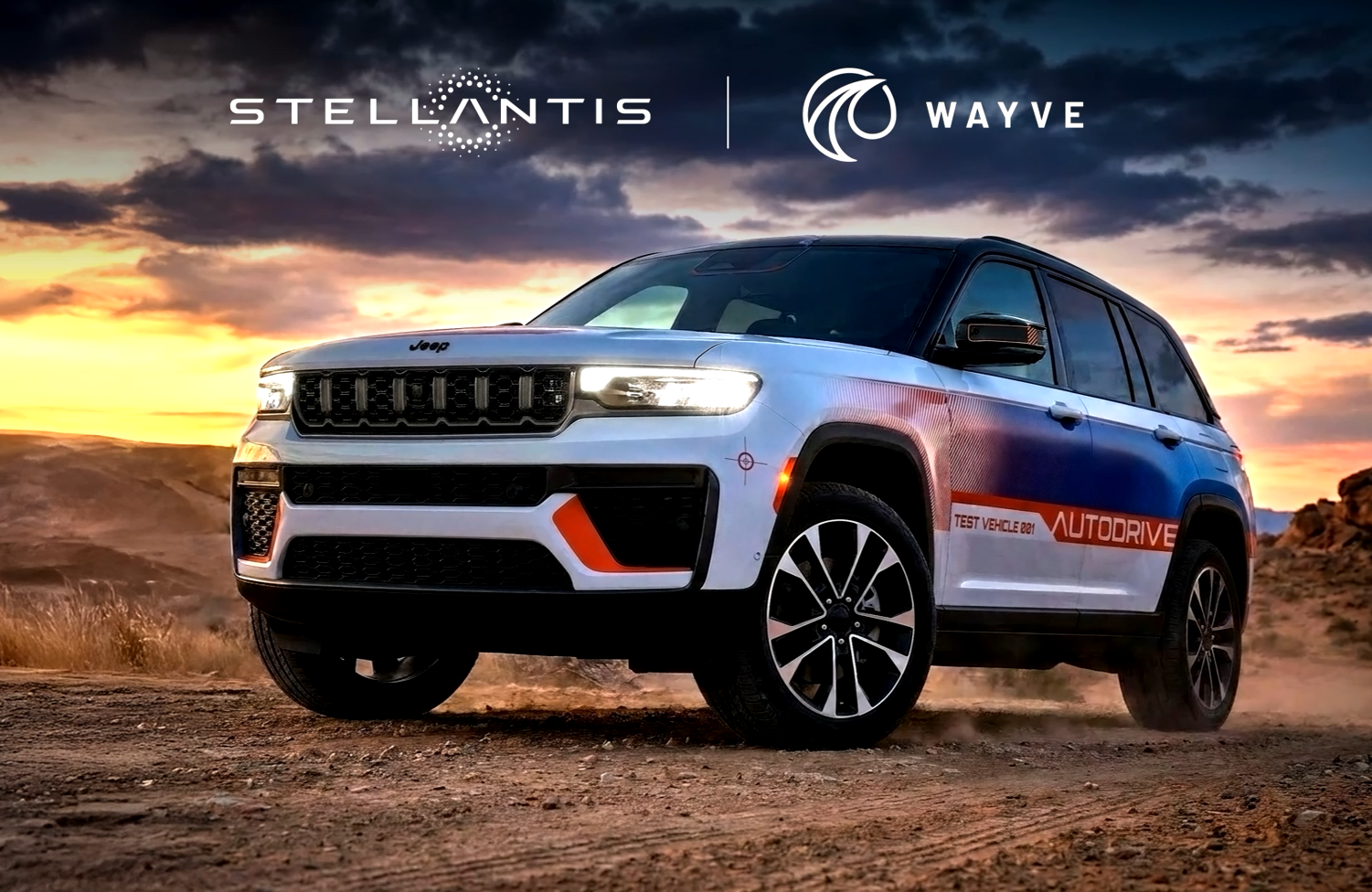
Last Thursday Stellantis announced a strategic technology partnership with Wayve to integrate AI-driven hands-free driving into the STLA AutoDrive platform. Translation: Jeep, Ram, Dodge, Chrysler, Fiat, Alfa Romeo, and the rest of the Stellantis portfolio are getting Level 2++ supervised hands-free driving across both city streets and highways. North America is first. Launch is 2028.
This is not another robotaxi story. This is something bigger.
For two years the autonomous vehicle conversation has been dominated by three names. Waymo. Tesla. Zoox. White minivans and Cybercabs and purpose-built pods. Most of America has never seen one in person and may not see one for years. That conversation is about to change very fast.
When Stellantis ships a Wrangler that drives itself hands-free from the parking lot of a Lowe's to the parking lot of a Cracker Barrel, autonomous commerce stops being a coastal phenomenon. It becomes mass-market American consumer behavior. The Stellantis portfolio sells roughly 6.5 million vehicles a year globally. Even if a fraction of those buy into the hands-free package starting in 2028, the volume of supervised autonomous arrivals at the average retail curb is about to multiply by an order of magnitude that no robotaxi rollout could match.
The Wayve side of the deal is the part the property industry should be paying the most attention to. Wayve just closed a $1.2 billion Series D with Microsoft, Nvidia, Uber, Nissan, and Stellantis all in the same round. They are also building the robotaxi platform that Uber and Nissan will pilot in Tokyo on Nvidia DRIVE Hyperion. The same AI driver that will power the next-generation Wrangler is also powering the next generation of robotaxis. The brands at the curb are diversifying. The AI underneath them is consolidating.
The 2028 timeline matters too. That gives property operators about 30 months to ready their curbs for an autonomous mix that includes Waymos in SF, Cybercabs in Miami, Zoox pods in Austin, and a steady stream of supervised hands-free Jeeps and Rams arriving from suburban driveways across the country. The retailers and REITs already doing this work in 2026 are going to look prescient in 2028.
The AV brand mix at the retail curb just stopped being a robotaxi conversation. It is now an American consumer conversation. The property operators reading this newsletter have been ahead of the curve since the Tesla earnings issue. This is the same story, just with a Wrangler in the driveway instead of a Cybercab on the Strip. The curb that is ready for both wins.
AV ROUND UP
Waymo Just Pulled All Robotaxis Off Of Highways. The Reason Went Viral. On May 19 a viral video showed a Waymo blasting through construction cones on an SF freeway, swerving around trucks, and being chased by police. By May 21 Waymo had paused all freeway service in San Francisco, Los Angeles, Phoenix, and Miami while it ships a software update for construction zone navigation. This follows a separate recall of 3,500 vehicles for flooding response and a multi-week service pause in Atlanta and San Antonio. The leader is still leading. But for the first time in a while, the leader is also slowing down to fix things.
Walmart Can Now Deliver To 60% Of Americans In Under 30 Minutes. Wing Drones Are Now In The Bay Area. Walmart confirmed on its Q1 earnings call that it now reaches 60% of the US population in 30 minutes or less. The Spark Driver platform, Walmart Depots in Dallas and Bentonville, and the 4,600-store footprint are all being knit into a single rapid-fulfillment network. The bigger move this week is the Wing drone expansion to the SF Bay Area. Walmart is no longer just answering Amazon Now, they are turning the curb three-dimensional and adding vertical arrivals to the mix.
Figure AI's New Humanoid Robot Got Beaten At Package Sorting. By An Intern. A Business Insider story this week documented a Figure AI intern outperforming the company's humanoid robot in a head-to-head package sorting challenge. The story landed because it punctures some of the hype around humanoid robotics for last-mile fulfillment. The story matters because it underlines where the real autonomous progress is happening this year. It is not at the warehouse. It is on the road and at the curb.
Tesla's Austin Unsupervised Geofence Keeps Expanding. The Total Fleet Is Still Around 40 Cars. Independent trackers continue to show Tesla expanding the unsupervised Robotaxi geofence in Austin. The total fleet across Austin, Dallas, and Houston has stabilized to around 40 to 50 vehicles. The contradiction every operator should hold in their head: trajectory is real, scale is still tiny. The first city where Tesla actually competes with Waymo on coverage is going to be the test of whether the trajectory is the story or the fleet size is.
SPOTLIGHT: Direct Delivery Goes Live In Austin In July. The Story Belongs To The Brand Doing It.
In July, a retailer in Austin is going to start delivering orders autonomously. No driver required...with a supervisor in the vehicle for now as the technology gets tuned. Every order will be coordinated through Autolane's OS.
Direct Delivery is what happens when a retailer runs their own autonomous fleet. The retailer owns the vehicles, sets the geofence, and keeps the customer relationship. Autolane runs the orchestration layer underneath.
The commercial product is going live this July in Austin. If you want to be part of the early cohort, reach out to cam@goautolane.com
SIGNALS TO WATCH
The Wayve cap table is the most overlooked signal of the week. Microsoft, Nvidia, Uber, Nissan, and Stellantis are all on the same $1.2 billion round. That is the entire non-Waymo, non-Tesla, non-Zoox AV ecosystem consolidating around a single AI driver. The pattern is familiar. In every major technology cycle, the foundation layer eventually consolidates while the products at the edge proliferate. Autonomy is now in that phase. The curb is the edge.
The Waymo freeway pause is a maturity signal, not a regression signal. A company that paused freeway service across four major markets within 48 hours of a viral incident is a company building the safety operating habits that AVs need to survive at scale. It does not feel like a win this week. But every property operator hosting these vehicles should want this kind of pause-fix-redeploy discipline from every AV operator they are about to share a curb with. The companies that learn how to do this in 2026 will be the ones still operating in 2030.
The Walmart Wing drone news adds a third dimension to the curb. Until this week the curb conversation was a ground-level conversation. Robotaxis arrive. Sidewalk robots arrive. Delivery vans arrive. Now drones arrive. Every shopping center and lifestyle property in a Wing market is now thinking about where a drone lands, where the customer picks up, and how that handoff coexists with the AV pulling up to the same property fifteen minutes later. The last 50 feet just got a third axis.
Federal Realty, Jamestown, and Simon Property Group keep showing up at the front of this story. None of that is a coincidence. The REITs who are already running curb pilots are the same REITs who are reporting strong Q1 numbers and the same REITs who put their executives on the ICSC PropTech Content Stage last week alongside Ben. The property operators who started this work in 2024 and 2025 are about to spend the back half of 2026 watching everyone else try to catch up.
THE LAST 50 FT
Episode 8 is out now. Ben and Cam debrief straight from ICSC Las Vegas. What property operators were actually asking at our booth and what the Cybercab rollout in Texas means for the operators watching it from the curb. Short episode. Big takeaways.
THE AUTOCOMM BRIEF TAKE
Two weeks ago we wrote about Waymo expanding into more territory than Rhode Island. This week Waymo paused freeway rides across four cities, Stellantis put Wayve AI inside every future Jeep, & Walmart unlocked 30-minute delivery to 60% of the country.
The pattern is not slowing down. It is widening. The first phase of autonomous commerce was about whether the technology worked. We are past that. The second phase is about who shows up at the curb and what the curb does about it. The answers are no longer hypothetical.
Direct Delivery goes commercial in Austin in July. That is Autolane's answer to every operator who has been asking how to compete when Amazon owns the inbox, Walmart owns the storefront, and a Stellantis fleet is on its way. The retailers and property operators reading this newsletter already saw this coming. The early cohort is forming now.
The lane is changing. Let's make sure it leads somewhere worth going. 🏁
coverage.goautolane.com