Issue #015
The Autonomous COMMERCE Brief
June 11, 2026
THE BIG STORY: Europe Just Went From Zero To Robotaxi In 90 Days. The Curb Question Now Has Two Continents.
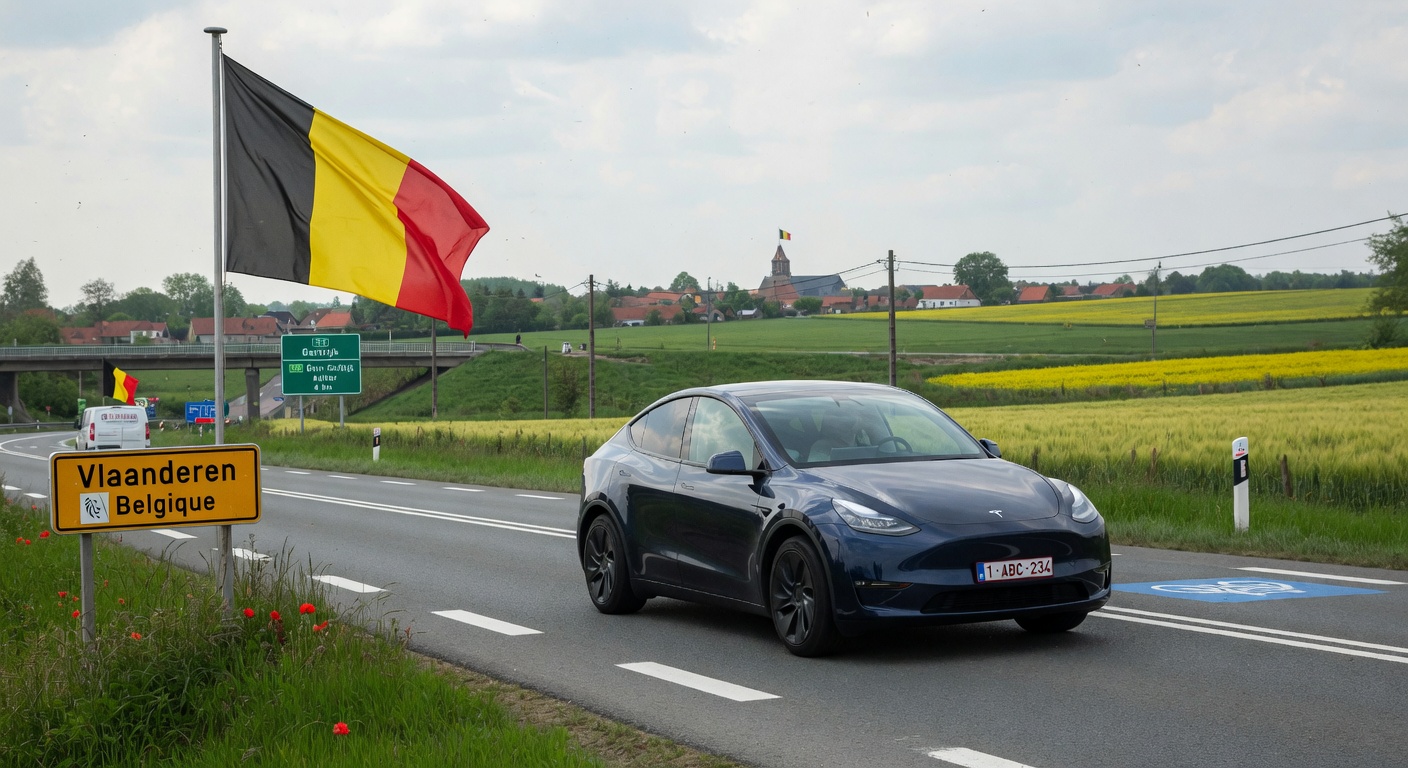
This week Belgium became the fifth EU country to approve Tesla FSD Supervised, joining the Netherlands, Estonia, Lithuania, and Denmark. Five countries in under 60 days. Early data from the Netherlands shows FSD Supervised vehicles recorded 3.5 times fewer collisions than manual driving in the first 55 days of operation. The same week, Uber and Wayve opened London's first public robotaxi waitlist. Wayve's VP of commercial operations said they are ready to launch and waiting for final approvals. When the service goes live, London becomes the first city in Europe where a consumer can hail a fully autonomous vehicle for a paid fare. Baidu, Lyft, and Waymo are all in line behind them.
What took the US four years to develop from first tests to commercial paid service is compressing into months on the other side of the Atlantic. Wayve has been operating supervised autonomous vehicles on London streets since 2017. The curb infrastructure question that American property operators spent three years grappling with is arriving on the doorstep of London's commercial real estate market in a single summer.
Every property operator from Westfield in Shepherd's Bush to the Trafford Centre in Manchester is 90 days from being in the same position that Austin and Atlanta were in two years ago. No coordinated zones. No plan for where the Wayve stops. No one expecting it. The playbook exists. The question is who picks it up first.
Image Source: Not an FSD Tracker
AV ROUND UP
An Unsupervised Tesla Robotaxi Got A $75 Parking Ticket In Austin. Cathie Wood Was In The Passenger Seat. She Said She Forgot To Pay Attention. ARK Invest CEO Cathie Wood published a nine-minute video of her unsupervised Tesla Robotaxi ride through Austin on Monday. While the car sat waiting at the pickup zone, it received a $75 parking violation. Wood's assessment of the ride itself: "The fact that I was talking to you the whole time and didn't pay any attention to the ride itself means that I think it's completely safe." She later tweeted Elon Musk asking how Tesla handles violations at scale and added parking tickets as a new line item in ARK's valuation model. Tesla's Austin unsupervised fleet is now roughly 21 active vehicles covering the entire metro area.
Waymo Is Back In Atlanta. The Service Pause That Started After The Viral Freeway Incident Is Over. Waymo resumed commercial rides in Atlanta this week after a multi-week service pause following the May freeway construction zone incident and software update rollout. At Westside Provisions District in West Midtown, Jamestown's Jay Richard-Yu already put the upside on public record: 63 AV sessions in week one, 97% Waymo adoption. Rides being live again in Atlanta is good news for every operator watching what happens when the curb is ready.
Tesla Expanded Its Unsupervised Robotaxi Coverage To The Entire Austin Metro Area. The Fleet Is Still 21 Cars. Tesla expanded its driverless Robotaxi service from its original Austin pilot zone to cover the full metropolitan area this week, putting unsupervised vehicles into more neighborhoods, more restaurant corridors, and more retail zones than before. The fleet has not grown proportionally. At roughly 21 active unsupervised vehicles covering a city of 2.3 million people, the coverage expansion is a geofence decision, not a scale decision. The range doubled. The wait times did not improve.
SPOTLIGHT: Direct Delivery Launches In Austin In July The Brand Experience Belongs To The Brand.
In July, a major Austin brand starts delivering autonomously. No third-party platform. The customer receives their order from a supervised autonomous vehicle.
That is the model. The retailer, the restaurant, the grocer owns the relationship with their customer from the moment the order is placed to the moment it arrives. Autolane powers the coordination quietly underneath.
What gets us most excited about what comes next is what operators can do with the physical space inside this experience. The trunk handoff and the Smart Locker are brand canvases that no other delivery format has ever offered. The moment a customer opens a compartment and receives their order is an owned, intimate brand moment. The creative and marketing possibilities there are ones the industry is only beginning to think about. Think of the Tiktok and IG moments.
Austin is where that story starts. July is the opening chapter. If you want to be in the early cohort shaping what this looks like, reply to this issue.
SIGNALS TO WATCH
The Cathie Wood quote is the most honest AV safety endorsement of the year and it was not planned by a PR team. She was not paying attention. That is the benchmark. Not crash rates or disengagement data or regulatory filings. The moment the technology becomes comfortable enough to be ignored is the moment it scales. That happened in public, on camera, in Austin, this week.
The $75 parking ticket is actually an infrastructure story. The unsupervised Tesla was sitting at the pickup zone waiting for its passenger. It had no designated spot to wait in. It exceeded the curb time limit. It got a ticket. That is not a Tesla software problem. That is a curb management problem. Every property operator running an AV pickup zone without a coordinated system is one slow Robotaxi away from the same situation, except their tenant relationships and city permits are the ones on the line, not just a $75 fine.
The EU approval pattern is moving faster than anyone modeling European AV timelines assumed 12 months ago. Five countries in 60 days. 3.5 times safer than manual driving in early Netherlands data. The harder markets, Germany, France, the UK, have not moved yet, but the political and safety narrative has shifted. The question is no longer whether European regulators will approve autonomous driving systems. It is which properties are ready when they do, and which ones will scramble.
The David Moss coast-to-coast story, which is the topic of this week's podcast, carries a signal that does not get enough attention in the commercial real estate world. The man who has driven more FSD miles than anyone alive sells LiDAR for his day job. He thinks Tesla's vision-only system wins because it has no geofence and anyone can afford it. When the person with the most miles and the most industry expertise picks affordability and ubiquity over sensor superiority, operators should take note. The curb that is ready for a $35,000 Model Y is ready for everything that follows.
THE LAST 50 FT
Episode 10 is out now. David Moss drove coast to coast across the United States without touching the steering wheel once. Then he did it across Canada. He is a LiDAR salesman by trade and the highest-mileage FSD user on the planet, and this week Ben and Cam asked him the only question that matters: if Tesla shipped unsupervised FSD to his car right now, would he go sit in the back seat? His answer, and his prediction for when the rest of the world gets to do the same, is the best six minutes of podcast we have produced.
Listen to Episode 10 here
THE AUTOCOMM BRIEF TAKE
This week a woman sat in the front seat of a driverless car in Austin and forgot to pay attention. She said that out loud. On camera. To millions of people.
There is a $75 parking ticket that says the car was waiting at the wrong curb. There are five EU countries that just approved the same technology for their roads. Next month autonomous delivery goes live in Austin. There is a waitlist in London for people who want to be first.
The operators and brands reading this newsletter are the ones who see all of these things as the same story. Not separate headlines. One story. The curb is the center of it.
The lane is changing. Let's make sure it leads somewhere worth going. 🏁
coverage.goautolane.com