Issue #016
The Autonomous COMMERCE Brief
June 18, 2026
BIG STORY
Waymo's Sixth Recall in a Year Is a Signal, Not a Stumble
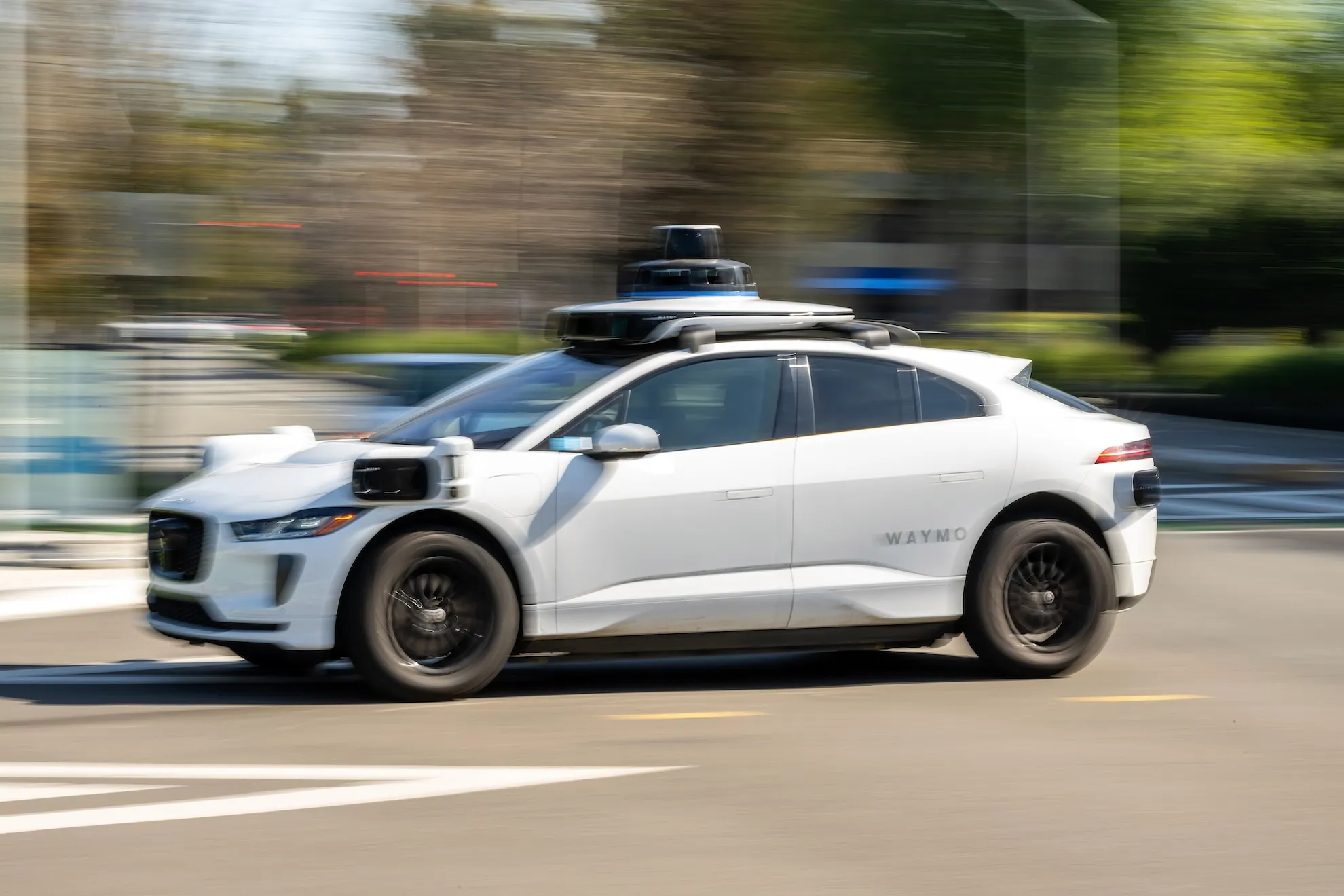
Waymo recalled its entire fleet of nearly 4,000 robotaxis this week after 13 incidents in which vehicles drove into closed highway construction zones. Six happened in Phoenix in April, seven more hit the San Francisco Bay Area on a single day in May. In one incident a passenger described watching the car accelerate through cones and emergency lights while a police car gave chase.
It is the company's sixth recall in under a year. Each time, Waymo caught the issue, filed a voluntary NHTSA notice, and pushed a software fix. The process is working as designed. But each recall also confirms the same thing: edge cases are real, they are varied, and they do not show up until the fleet scales into new environments.
Waymo only added freeway rides in November 2025 and pulled the feature entirely seven months later. The software that handles city streets well enough to log 170 million miles had a blind spot for temporary construction zones. What stands out is not the stumble. It is the response. Waymo caught it, disclosed it voluntarily, restricted operations immediately, and filed with regulators before anyone asked. That is what a responsible operator looks like, and in an industry still earning public trust, it matters.
Autolane operates at the last 50 feet of every ride. The question for every property operator watching this week's news is not whether AV deployments will have edge cases. They will. The question is whether the environments those vehicles arrive at are equipped to handle what happens when software meets the real world. That answer lives at the curb.
Image source DAVID PAUL MORRIS/BLOOMBERG / GETTY IMAGES
AV ROUND UP
Uber announces Houston as its second robotaxi market, targeting mid-2027. Working with Nuro and Lucid, Uber locked in Houston as its second U.S. city for a premium robotaxi service. Nearly 100 test vehicles are already running on Houston's public roads 24 hours a day. Uber also secured a 50,000-square-foot depot in the city to support fleet operations at scale.
Tesla's Cybercab is EPA-certified and staged in Texas. The production Cybercab appeared at the Texas DOT's annual innovation showcase this week, with the executive director calling it a tangible sign of how fast transportation is evolving. Over 150 production units were spotted staged at Giga Texas and the EPA Certificate of Conformity cleared in late May. Unsupervised FSD remains on track for late 2026.
Stellantis, Wayve, and Uber formalized a Level 4 global robotaxi partnership. The three-way deal pairs Stellantis vehicle platforms, Wayve's AI driver, and Uber's mobility network to scale driverless service across Europe, North America, and beyond. It builds on Uber's earlier June announcement that London's first robotaxi sign-ups are open, using Wayve technology on Ford Mustang Mach-E vehicles pending Transport for London clearance.
Waymo is expanding to more than 20 new cities in 2026, including London and Tokyo. Even mid-recall, Waymo's growth timeline has not changed. The London rollout puts it in direct competition with the Uber and Wayve partnership targeting the same city this year. Tokyo remains on the calendar as well.
SPOTLIGHT
What Uber's Houston Depot Tells Retailers About What's Coming
When Uber announced a 50,000-square-foot depot in Houston to support its incoming robotaxi fleet, most coverage treated it as a logistics detail. For anyone who owns or operates commercial real estate in Houston, it is not a detail.
A robotaxi fleet needs reliable places to stop. That means retail centers, QSR properties, mixed-use developments, anywhere a trip ends. The passenger hailing a ride near the Galleria does not care what happens at the depot. They care where the car drops them off. Those are curb decisions. Those are property decisions.
Houston is the fourth-largest city in the country and its commercial corridors are almost entirely unmanaged from an AV-coordination standpoint. The depot story makes the news. The curb story determines whether the service actually works.
If you manage commercial property in a city where AV services are headed and want to understand what readiness looks like, 👉 coverage.goautolane.com
SIGNALS TO WATCH
The Waymo recall arrived alongside Uber expanding into Houston, Stellantis formalizing a global robotaxi buildout, and Tesla's Cybercab certified and staged in Texas. None of these stories cancel each other out. They are all part of the same wave, and the question is what the pace of that wave means for operators sitting on the other side of the curb.
Houston was chosen in part because of its clear regulatory framework. That is AV industry language for a city that has not tried to block the technology. Regulatory clarity is becoming a competitive advantage for metros. Cities that have figured out how to accommodate AV deployment will receive investment earlier. Cities that have not will wait, or get passed over.
The Waymo construction zone recall also reveals something broader about software and environment design. The system failed because highways contain dynamic, temporary changes that do not always match what was mapped. Retail properties face the same challenge, with seasonal events, construction, vendor loading zones, and shifted traffic patterns. Managing that variability is not a software problem alone. It is a property management problem, and it is one that does not solve itself.
THIS WEEK ON LINKEDIN
The car drove itself home. The real shock is what comes next.
Pascal Bornet, an AI and automation strategist with over two million LinkedIn followers, put out a post this week that reframes what a Tesla driving itself from a factory to its new owner's driveway actually means. The milestone is not the autonomous drive. It is what the drive signals about where physical products are headed.
His argument: for decades, software lived inside physical products. Now physical products are starting to behave like software. A car that delivers itself today could drive itself to a service center tomorrow, recharge itself, reposition itself, and eventually participate in logistics, payments, and revenue generation without waiting for a human to operate every step. The vehicle is no longer just a vehicle. It is becoming an autonomous participant in a system of decisions and operations.
The question Bornet closes with is the right one for anyone in this space: it is not which products will get AI. It is which products will become agents. For property operators managing the physical endpoints of autonomous commerce, that question is not abstract. It is already arriving at the curb.
THE LAST 50 FT
On this week's episode of The Last 50 Ft, Cam and Ben sit down with Jonas Lamis, six weeks into building Remount, a platform designed to let everyday people own, operate, and profit from the coming wave of autonomous vehicles. Think of it as a REIT for robot fleets. Ben makes the case that Remount may be the most important piece of infrastructure nobody is talking about yet. If vehicle supply cannot scale fast enough to meet autonomous commerce demand, the whole industry stalls. Jonas is building the capital layer that could prevent that. Then comes the bet: Ben, Cam, and Jonas each pick the week a Cybercab completes its first unsupervised commercial ride. The wager is a salt lamp and a 3D sculpture Jonas refuses to part with. 🎧
THE AUTOCOMM BRIEF TAKE
This week had a lot of noise. A fleet recall. Uber staking a new city. A three-way global partnership. A certified Cybercab staged in Texas. London opening its first AV sign-up list.
The signal underneath all of it is the same one it has always been. The curb is the last decision in every autonomous trip. The depot, the software, the vehicle, the route, none of it matters if the last 50 feet does not work.
You are reading this because you are one of the people who owns or operates those endpoints. The lane is about to change in your market. That is not something to wait on.
The lane is changing. Let's make sure it leads somewhere worth going. 🏁
coverage.goautolane.com