Issue #030
The Autonomous COMMERCE Brief
September 24, 2026
BIG STORY: The Most Important Delivery Story This Week Came From a Small Restaurant in Austin
This week the money went big. Zipline is reportedly raising $1 billion at a $20 billion valuation. Costco went nationwide on DoorDash and Uber Eats. Matternet became the first public pure-play drone delivery company. But the story that stuck with us came from a small restaurant operator in Austin.
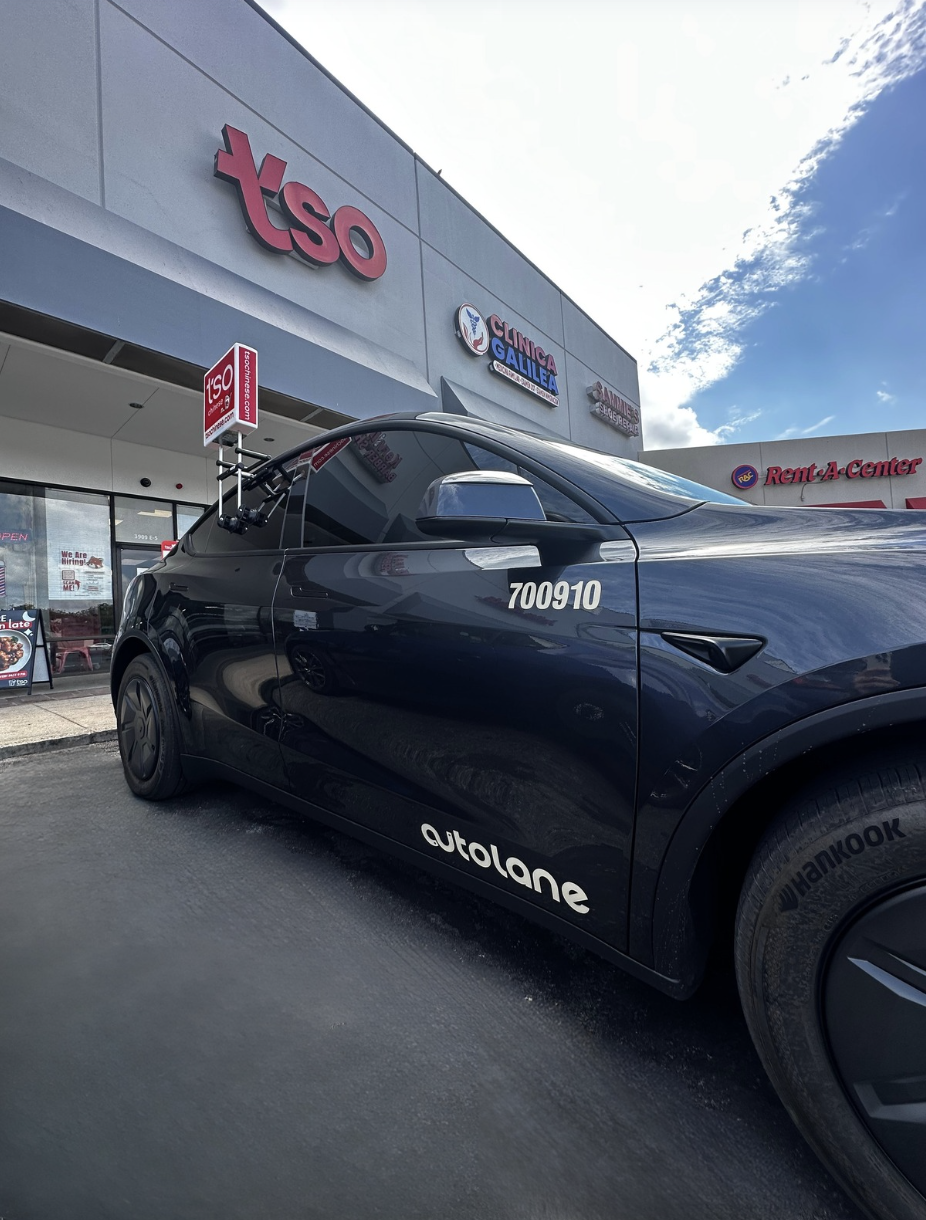
For the last three months, TSO Chinese Delivery & Takeout has been offering customers autonomous delivery at the same price they already pay, and customers are choosing it.
That matters because technology like this usually lands with national chains first. A small operator doesn't have an innovation team or a tech budget. Here, a neighborhood restaurant got access to the same autonomous delivery the biggest brands are racing toward, and its customers got a new way to get dinner from a place they already love.
The future of delivery is being proven by the operators who can least afford for it to fail. Autolane coordinates the last 50 feet so the restaurant knows what's arriving, when, and where it stops. The owner keeps the customer.
Image source: Autolane
AV ROUND UP
Tesla crosses 1 million unsupervised miles. Tesla says its robotaxi fleet passed the million-mile mark in fully unsupervised operation, adding roughly 620,000 of those miles in just six weeks. Unsupervised service now runs in Austin, Dallas, Houston, Miami, Orlando, and Tampa. That's six Sun Belt metros where autonomous cars are already pulling up to storefronts.
Wayve wants to be the brain inside everyone else's car. Instead of building its own fleet, Wayve licenses its driving AI to automakers and operators like Nissan, Stellantis, and Uber. It also just hired Waymo's former CFO. If the licensing model works, the number of autonomous brands showing up at a single curb could multiply fast.
Dollar General and Instacart launch on-demand delivery. The two kicked off a pilot across six states, bringing fast delivery to a retailer whose stores sit in small towns and neighborhood corners. On-demand is no longer a big-city perk.
Waymo adds Denver, San Diego, and Tampa. Waymo keeps stacking new markets as the robotaxi race heats up. Tampa now has both Waymo and Tesla running fully autonomous, making Florida one of the most competitive AV states in the country.
THIS WEEK ON LINKEDIN
We follow Henriette Cornet, PhD, CEO of Urban Innovate, and always find her posts insightful. This week she shared one we wanted to pass along.
Waymo and Visa just launched a Bay Area program that rewards riders with Waymo Cash when they pair a Waymo trip with public transit. Henriette studied Waymo's 2024 transit credit pilot and found incentives like this can shift behavior, especially when an autonomous ride solves the first or last mile. Now the linked card makes it possible to see if that holds at scale. Her take is worth a read, and she's worth a follow.
The takeaway for operators: every connection point is where autonomous trips click or fall apart. Make the handoff easy and people come back.
THE LAST 50 FT
On Episode 21, Cam and Ben turn the mic on one of our own. Hamei Hamedi, Marketing Manager at Autolane, spent 15 years in hospitality before joining the autonomous side of the business. He talks about how AI is showing up in hospitality, how he sees Autolane transforming the industry he came from, and of course, his favorite places to eat. If you run a restaurant or the property it sits on, this one is for you. Episode 21 drops this Friday afternoon.
Listen on Spotify, YouTube, and Apple Podcasts 🎧
THE AUTOCOMM BRIEF TAKE
It's easy to read a week like this and think autonomy belongs to the giants. Twenty billion dollar valuations, nationwide rollouts, and public listings. Those numbers are real, and they matter.
But the part we keep coming back to is simpler. A restaurant owner in Austin offered customers a new way to get their food, at the same price. The orders showed up. The customers came back. Nobody needed a billion dollars to make that happen.
That's the opportunity for everyone reading this. Whether you run one location, a strip center, or a portfolio of properties, the tools that used to be reserved for the biggest brands are showing up at your curb right now. The operators who try them early get to shape how they work. You don't have to wait for permission from the big players. You just have to decide that you want in.
The lane is changing. Let's make sure it leads somewhere worth going. 🏁
Subscribe to the Autonomous Commerce Brief: goautolane.com/newsletter-signup